The Stoicism of If-
Rudyard Kipling’s classic poem and Marcus Aurelius’ Meditations

If you can keep your head when all about you
Are losing theirs and blaming it on you,
If you can trust yourself when all men doubt you,
But make allowance for their doubting too;
If you can wait and not be tired by waiting,
Or being lied about, don’t deal in lies,
Or being hated, don’t give way to hating,
And yet don’t look too good, nor talk too wise:
If you can dream—and not make dreams your master;
If you can think—and not make thoughts your aim;
If you can meet with Triumph and Disaster
And treat those two impostors just the same;
If you can bear to hear the truth you’ve spoken
Twisted by knaves to make a trap for fools,
Or watch the things you gave your life to, broken,
And stoop and build ’em up with worn-out tools:
If you can make one heap of all your winnings
And risk it on one turn of pitch-and-toss,
And lose, and start again at your beginnings
And never breathe a word about your loss;
If you can force your heart and nerve and sinew
To serve your turn long after they are gone,
And so hold on when there is nothing in you
Except the Will which says to them: ‘Hold on!’
If you can talk with crowds and keep your virtue,
Or walk with Kings—nor lose the common touch,
If neither foes nor loving friends can hurt you,
If all men count with you, but none too much;
If you can fill the unforgiving minute
With sixty seconds’ worth of distance run,
Yours is the Earth and everything that’s in it,
And—which is more—you’ll be a Man, my son!
If- by Rudyard Kipling
14 years ago, in 2007, I had for the first time in my life a whole class dedicated to literature. I engaged profoundly with this course, and I’m still able to remember some of the books I read that year1 . That list included A Streetcar Named Desire, some Roald Dahl short stories, and poetry analysis.
Teachers have the potential to transform how a student sees a certain subject. When done well, they can change how a student sees the world and its relation to it. This is not only closed up to literature or the humanities, but it can also involve natural sciences.
Professors are not necessarily able to engage all students “a la” Dead Poet’s Society , but they surely can transform at least one soul, and does it not make this worth it? I remember classmates engaging with other teachers from whom I wasn’t able to.
Teaching is an art in its own way and not a mere transfer of information from master to student. There is something in that relationship that can’t be replaced by books or videos.
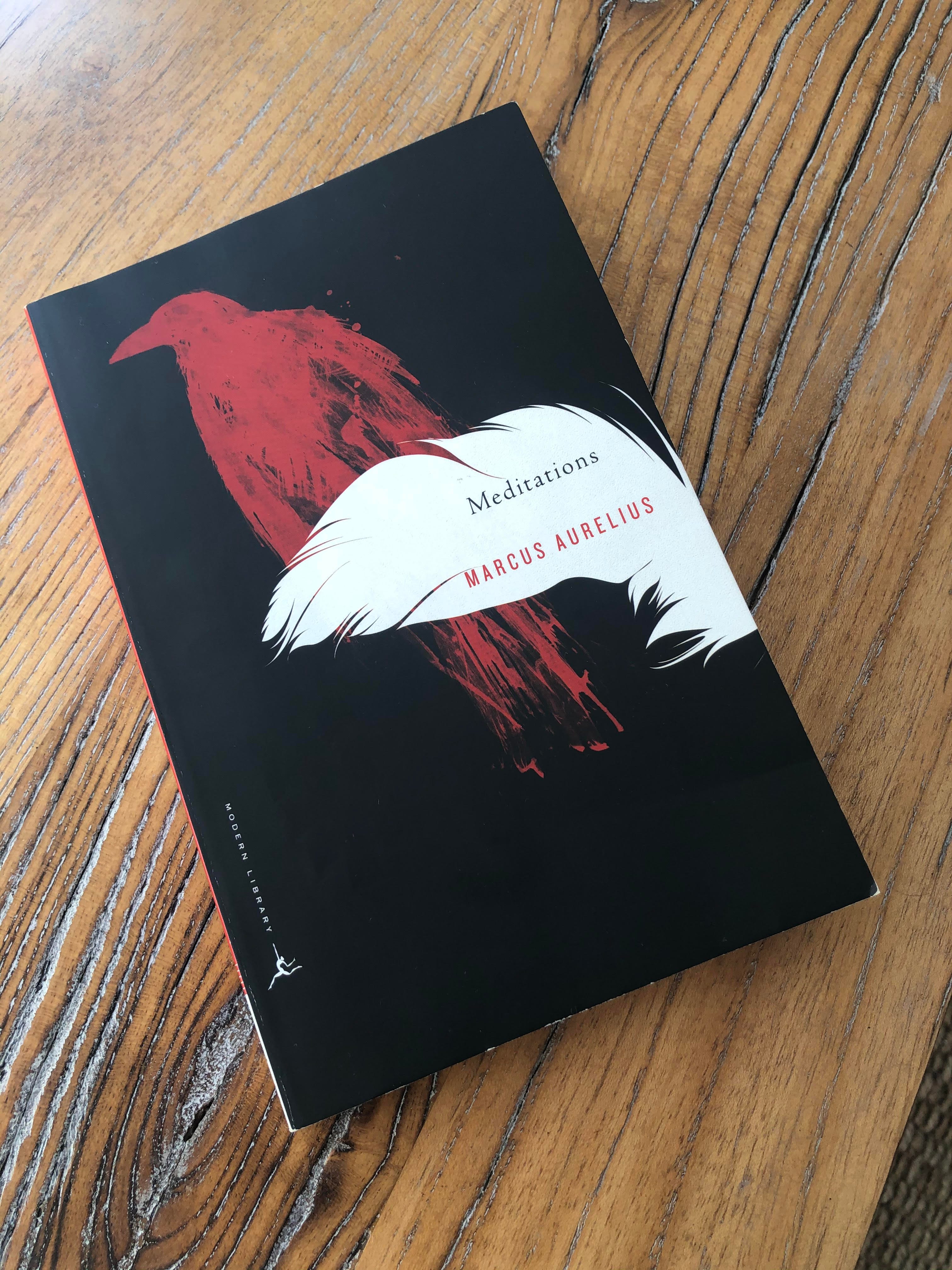
Marcus Aurelius would start over 2,000 years ago thanking his mentors and teachers, be it his parents, slaves, professors, brothers or the gods. The values he was taught were elemental to his being. He starts of his Meditations with these words:
1.1 To my grandfather Verus
Character and self-control.2
The largest piece of literature that impacted me in that Literature class was the poem If-. I remember printing it and leaving it in my bedside for re-reads. It resonated in another level.
Little would I know that I’d be attracted to a similar philosophy in Stoicism 14 years later. While reading Seneca, Epictetus, or Marcus Aurelius, the poem echoes in my head like it did in my adolescence.
A Victorian era poem that one can see at a certain level, lived through Queen Elizabeth II and what we see from British Royalty (despite what Meghan Markle says in her interview with Oprah).
This poem is partly portrayed in Kipling’s life in the movie My Boy Jack (a movie about the dealings of Rudyard Kipling and his son’s death in WWI). Kipling despite being more widely known for The Jungle Book, wrote poetry and has had a lot of fame as he was a promoter of British Imperialism. If- is one of his most famous poems. (naturally as he was born in Bombay and lived as a globetrotter).
Victorian era respected and internalized the Stoic values very firmly as we can see throughout English literature.
What one sees from afar is that there seems to be a certain care for these values, they are trained in Wisdom (not engaging constantly in the banality of current politics, being discrete in their daily lives), Justice, shown Courage and Moderation. It only takes a tour of some countries to see that people with that amount of power have a hard time showing the self-control that the Royal Family has since Victorian times.
Marcus Aurelius’ Meditations is a book that can be perfectly seen as an account of his thoughts that are almost perfectly portrayed in If-. One could only read Book 1 of Meditations and see their relationship. The Roman Emperor, mentions3 learning about self-control (example above) , tolerance (1.9), moderation in correction (1.10), education (1.7), death (this is not present in book 1 but there is an example is present in 11.34). One could find the same references with other Stoic authors like Seneca (who also lost a child as Kipling did) or Epictetus’ Discourses.
Modern Stoicism also show some signs towards Victorian-era stories. Ryan Holiday published a few weeks ago The Boy Who Would Be King, based on Marcus Aurelius’ life. One of Kipling’s story is The Man Who Would Be King, both are children stories in faraway lands (Ancient Rome and Afghanistan).
There seems to be an attractiveness to power and using it correctly in both (Stoicism and Victorian) throughout their works, that go deeper than just a similar name.
Both can stand as self-help literature in the simplest form (but not in a basic way). They are simple reminders for themselves or their own kids to become men, responsible for oneself and in search of the higher moral ground. Accept our nature and to transform oneself into a Man, with a capital M, by attaining to universal values that makes each one responsible and stay away from social sins.
Disclaimer: Some of the links in my posts may have affiliate links. I receive some income that helps me finance time spent on these posts as well as preparing other posts. Thanks for your help!
Specially in comparison to other schools and years. I studied in five schools and moved cities once every couple of years.
Marcus Aurelius (2002). Meditations translated by Gregory Hays. Modern Library.
This book is written with 12 books with numbered chapters. So 1.1 is Book 1, Chapter 1.